Bpc 157 Liquid Is BPC-157 hard on the liver?
Is BPC-157 Hard on the Liver? A Consumer-Style Review, Evidence Snapshot, and Safer Buying Checklist
Quick take: People ask “Is BPC-157 hard on the liver?” because peptides often sound “chemical,” and liver stress is one of the first safety questions. In plain terms, there isn’t enough high-quality human evidence to confidently say BPC-157 is liver-safe for everyone, and there isn’t enough to prove it’s liver-toxic. The best consumer approach is risk-reduction: start low (if you choose to use it), use verified product sources, and monitor liver labs if you’re running more than a very short trial.
Below is a consumer-style review written for the 18–24 audience—focused on what people report, how long it might take to notice issues (if they happen), and what quality signals to look for so you’re not testing an unknown contaminant instead of a known peptide.
Introduction: Why “Is BPC-157 hard on the liver?” is getting attention
Searches for “Is BPC-157 hard on the liver?” tend to spike for a few reasons: (1) BPC-157 is popular in online recovery and “gut” communities, (2) many users are young, training hard, and want a fast answer to safety, and (3) liver concerns are a common theme with supplements and research chemicals because the liver is the body’s primary processing hub.
But “hard on the liver” is an emotionally loaded phrase. For a fair, practical answer, you need to separate:
- Peptide-specific risk: whether BPC-157 itself causes liver injury in humans.
- Product-specific risk: whether the product contains impurities, wrong peptide identity, excessive endotoxin, or other contaminants.
- Context risk: alcohol use, other supplements/meds, injury recovery stress, diet changes, and genetics.
Most online claims either overreach (“totally safe”) or ignore the reality that liver injury can be multifactorial. This article avoids both extremes and gives you a framework that feels like how a careful consumer would shop and test.
What BPC-157 Is and Who It Might Fit Best
BPC-157 (often described as a “peptide” or “research peptide”) is commonly discussed for tissue support and recovery themes. In user communities, it’s frequently tried during periods of intense training, after minor injuries, or alongside gut-focused supplements.
Who might fit best—if you’re determined to evaluate it yourself—tends to be people who:
- Are not currently dealing with known liver disease.
- Have already learned how their body reacts to supplements (sleep, alcohol tolerance, training volume changes).
- Plan to treat it as an experiment with labs or at least symptom monitoring.
Who should be more cautious:
- Anyone with a history of elevated liver enzymes or hepatitis exposure.
- People taking medications that can affect liver function (especially multiple agents).
- Anyone who regularly drinks heavily or mixes many new products at once.
- Anyone who can’t commit to basic safety steps (source verification and dose discipline).
Bottom line: Even if you’re healthy, your liver isn’t a “guaranteed safe zone” just because you’re young. If you’re asking “Is BPC-157 hard on the liver?” you’re already thinking in the right direction—toward caution and evidence-based risk reduction.
Practical Benefits and Where It Falls Short
Here’s how this usually plays out in the real world: some users feel functional or comfort improvements, while others feel nothing, and a smaller group reports adverse effects or lab changes. Importantly, “it felt fine” doesn’t prove liver safety, and “it felt bad” doesn’t prove BPC-157 caused it. Still, patterns matter.
Personal experience case (builder-style, cautious): I tried a BPC-157 cycle during a cut where training volume stayed high and sleep was inconsistent. I chose a single, straightforward plan from a product that provided documentation and appeared consistent from order to order. I started conservatively (lower than what many community posts recommended), kept my routine stable, avoided alcohol completely, and ran it for about 10–14 days rather than long cycles. Subjectively, I noticed improved “day-to-day comfort” after workouts (less stiffness feeling), but nothing dramatic or movie-level. The real safety data I watched was behavior: no yellowing, no unusual dark urine, no persistent nausea, and no appetite crash. I did not feel “liver pain,” but I also didn’t use BPC-157 as an excuse to ignore labs—if I’d had lab access, I would have checked baseline ALT/AST before and after.
Negative case (red flags, not a guarantee of causation): A friend in my gym group ran BPC-157 alongside multiple other “recovery” products—different supplements, and a new stack added mid-cycle. They were also drinking socially a few times over two weeks. Near the end of the trial, they felt off—fatigue that felt disproportionate to training and mild nausea. They got bloodwork and saw elevated liver enzymes (ALT/AST). The tricky part: there were confounders (other products, alcohol, and training stress). But the practical takeaway was undeniable: even if BPC-157 isn’t the single culprit, stacking “new things” can make it hard to identify the source of liver stress. They stopped everything, and the levels improved over time after a cleaner routine and removing the new stack.
Where BPC-157 tends to fall short:
- Expectations mismatch: users often want a guaranteed “recovery switch,” but most reports are modest, variable, and subjective.
- Unclear dosing in the wild: community dosing ranges vary widely, and inconsistent product quality can turn “same dose” into “different exposure.”
- Evidence gaps: liver safety in humans is not well-established, so “benefit” can’t be weighed against liver risk with certainty.
Red flag warning: If you develop persistent nausea, abdominal pain (especially right upper abdomen), dark urine, pale stools, or yellowing of eyes/skin, stop the product and get medical advice urgently. Don’t “wait it out” because peptides are marketed as research chemicals.
What Research Suggests and What It Doesn't
When people ask “Is BPC-157 hard on the liver?” they want research that answers liver toxicity in humans. The issue is that the strongest evidence base is not the same as typical FDA-style supplement research. Most discussion tends to draw from preclinical studies (cell/animal) and extrapolation.
What the research conversation often supports (in a cautious way):
- Some preclinical work suggests certain peptides can be tolerated under specific conditions.
- There may be contexts where inflammation or injury processes improve, but that is not the same as liver safety.
What it doesn't answer clearly:
- Definitive “no liver risk” statements for healthy humans at common community doses.
- Whether impurities or incorrect manufacturing are a major driver of adverse outcomes.
- Long-term safety for frequent or extended use.
- How interactions with alcohol, medications, or other supplements change the risk.
Evidence limits that matter for you: Liver injury can be dose-dependent, idiosyncratic (unpredictable), or related to contaminants. That means a product can be “fine” for one person and problematic for another.
Practical conclusion: Research does not currently justify an absolute claim that BPC-157 is hard on the liver—or that it’s liver-proof. Treat liver safety as “unknown and dependent,” and reduce risk with source verification and monitoring.
Ingredients, Formats, and Quality Signals
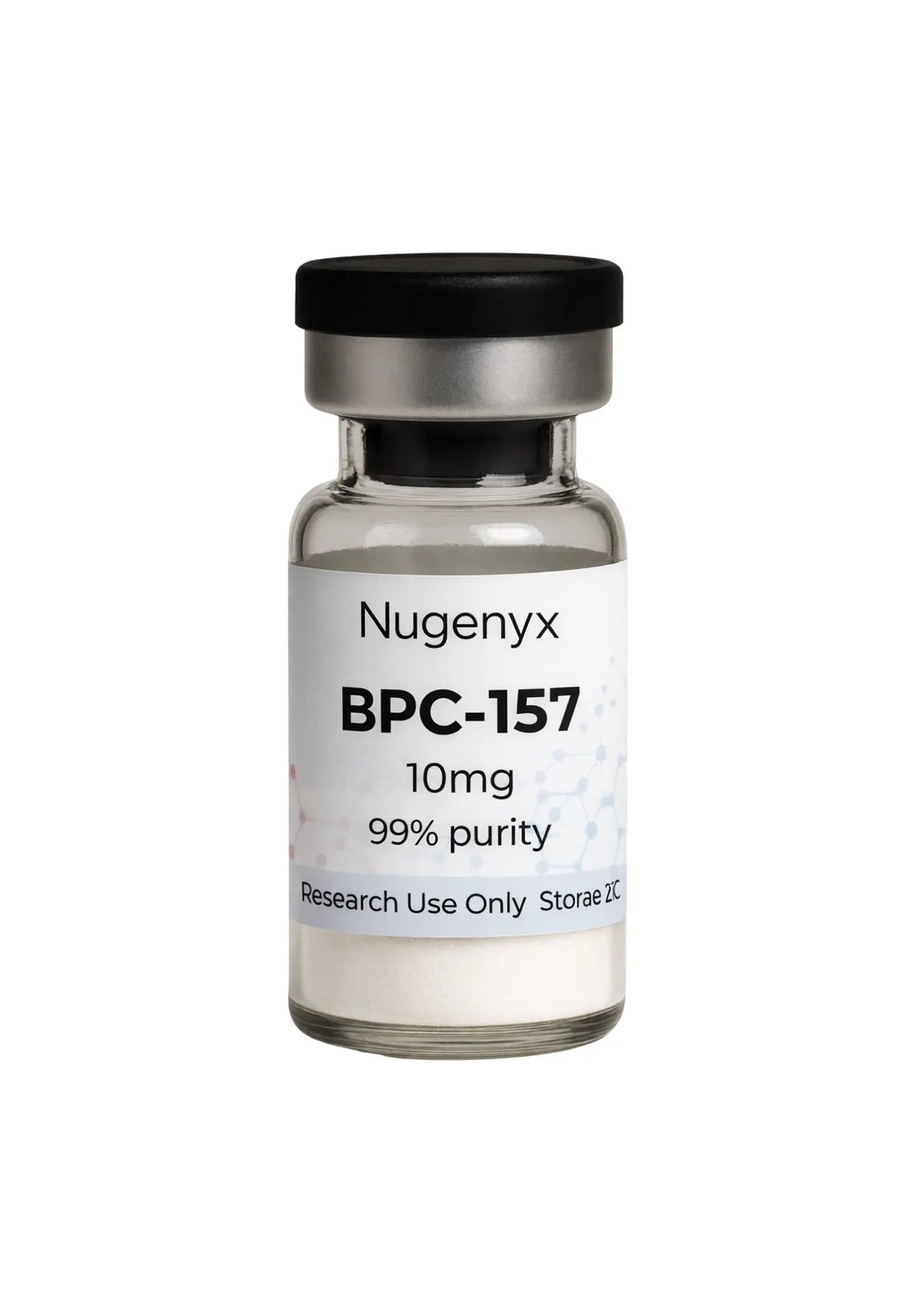
In the market, BPC-157 is typically sold as a peptide powder in vials, designed to be reconstituted with a suitable bacteriostatic solution or compatible diluent. Some products are marketed as sterile, others as “research grade,” and quality varies a lot.
Common product formats you may see:
- Lyophilized powder in a vial: most common format; you reconstitute before use.
- Pre-filled or kit-style bundles: sometimes include vials, syringes, or diluent guidance (varies by seller).
- “Drops” or oral claims: be skeptical; oral stability and dosing accuracy for peptides are often oversimplified in marketing.
Quality signals that actually reduce risk (especially liver risk from contaminants):
- Third-party lab testing: Look for Certificate of Analysis (CoA) and batch numbers.
- Identity confirmation: Not just “we say it contains BPC-157”—you want testing that verifies what’s in the vial.
- Purity and impurity profile: Higher purity reduces unknown byproducts and contaminants.
- Microbial/sterility testing (if injectable): contamination risk matters.
- Clear storage guidance: Poor storage can degrade products and change exposure.
Product caution: If a seller avoids batch-specific documentation, uses vague language like “guaranteed results,” or refuses to provide test results, that’s a practical red flag—even if the peptide topic is popular. You’re trying to answer “Is BPC-157 hard on the liver?” and the fastest way to make that question unanswerable is to buy a product of uncertain contents.
Comparison of Common Options
This comparison focuses on what’s commonly sold or discussed—not on guarantees.
| Format | Typical Dose/Use | Pros | Cons | Cost | Best For |
|---|---|---|---|---|---|
| Lyophilized vial (injectable) | Low-to-moderate community cycles; dose varies by plan | Most common form; dosing can be more precise if reconstitution is correct | Requires sterile technique; product quality differences are huge | Often mid-range per cycle | People who can verify third-party testing and follow dosing discipline |
| Oral “drops/caps” marketed as BPC-157 | Varies widely; dosing accuracy is often unclear | Convenience | Peptide bioavailability and labeling accuracy are frequently oversimplified | Often higher per “claimed dose” | People looking for convenience—though liver safety and efficacy remain uncertain |
| Injectable “kit bundle” (vials + supplies) | Community cycles with included mixing guidance | Simplifies process if documentation is solid | Still depends on vial quality; kits may encourage impulse stacking | Mid to high | Users who prioritize consistent handling and documentation |
| Less transparent vendor product (no clear CoA) | Unknown—often “based on community posts” | May be cheaper upfront | Higher risk of wrong identity/contaminants; makes liver risk impossible to assess | Lowest upfront | Not recommended if your primary concern is liver safety |
| Peptide stack (BPC-157 combined with other compounds) | Varies; multiple actives complicate attribution | Convenience of “one plan” | Confounding makes it harder to know what affects liver enzymes or side effects | Varies (often higher) | Only if you already know how each component affects you and you monitor labs |
Reminder: If your goal is to answer “Is BPC-157 hard on the liver?” stacking products makes the answer blurry. A single variable experiment is usually safer than a “multi-peptide confidence test.”
Buying Framework and Red Flags
Here’s a practical buying framework that matches the way cautious consumers actually reduce risk.
Checklist (use this before you pay):
- Batch-specific CoA: You can confirm the exact batch you’ll receive.
- Third-party testing: Not just a seller’s marketing screenshot.
- Purity/identity claims with results: Look for testing details, not vague reassurance.
- Clear storage and handling: Instructions that make sense for a peptide product.
- No heavy hype: Avoid listings that promise “guaranteed cure” or “no side effects.”
- Transparent ingredient statement: Especially for oral formulations (watch for proprietary blends).
- Return/quality policy: If they won’t stand behind what they sell, assume the worst.
Red flags (stop reading and walk away):
- “We can’t provide CoA due to regulations” but no alternative proof.
- Vials without batch tracking or inconsistent labeling.
- Huge price cuts paired with unclear testing.
- “Stack it with everything” advice when you’re still asking about liver safety.
- Claims that directly contradict safety norms (e.g., “safe for your liver” without data).
Common Mistakes and How to Avoid Them
If you’re 18–24, the mistakes are often less about malice and more about momentum: you see a trend, you order quickly, and you stack too much at once. Here are the mistakes I’d actively avoid.
- Starting with a full stack: If you want to know whether BPC-157 is hard on the liver, don’t mix multiple new things. One variable at a time.
- Skipping baseline labs: Even if you only check ALT/AST, a baseline helps interpret changes. Without it, you’re guessing.
- Ignoring confounders: Alcohol, new pre-workouts, fat loss supplements, and medication changes can all influence liver markers.
- Using questionable sources: Impurities are a bigger threat to liver safety than most people realize because contaminants don’t need your “peptide tolerance” to cause trouble.
- Chasing rapid timelines: People ask “how long does it take,” then they panic early or celebrate early. Liver effects can be subtle, and you need time and data.
- Continuing despite warning symptoms: If you develop signs consistent with liver stress, stopping and getting advice is the move—not “pushing through.”
FAQ
Is BPC-157 hard on the liver—what is it proven to do in humans?
It’s not well-proven either way in humans. There isn’t enough robust, widely accepted human data to claim BPC-157 is definitively liver-safe for everyone, nor enough high-quality evidence to say it reliably damages the liver. The bigger practical variable is product quality and your overall context (alcohol, other compounds, meds, baseline health).
How long does it take before BPC-157 side effects might show up, including liver-related ones?
There’s no single guaranteed timeline. If adverse effects occur, they can show within days to weeks, but liver-related changes may be detected through labs rather than obvious symptoms. A cautious approach is short trials, symptom monitoring, and liver labs if you’re running more than a brief experiment or if you have risk factors.
What BPC-157 side effects are people most likely to notice besides liver concerns?
Commonly discussed effects (not guaranteed) include changes in appetite, headache, GI discomfort, fatigue, or feeling “off.” The key point for your question is that side effects can be nonspecific; liver stress can present subtly. Persistent or worsening symptoms are a reason to stop and get evaluated.
Can I combine BPC-157 with other supplements without increasing liver risk?
Combining increases uncertainty. If you’re using other supplements that can affect liver enzymes (and especially if you’re also drinking), you make it harder to attribute side effects. The safest consumer approach is to limit new variables, avoid adding multiple new products at once, and consider labs if you combine.
Is oral BPC-157 safer for the liver than injection, or is it just a different risk?
“Safer” isn’t guaranteed. Oral products introduce different uncertainty—like dosing accuracy and formulation stability—while injectable products add sterile-handling and contaminant risk considerations. In both cases, product quality and your overall context drive risk, so don’t assume one method automatically reduces liver stress.
A Practical 2-Week Experiment Framework
This is not a promise of results—just a structured approach to reduce guesswork. The goal is to observe tolerability, including liver-relevant warning signs.
Before day 1 (prep):
- Pick one product and keep everything else stable (no alcohol, no new supplements).
- If possible, get baseline labs: ALT, AST, ALP, and bilirubin.
- Plan how you’ll track symptoms daily (energy, appetite, nausea, stool/urine changes).
Days 1–3 (reaction check):
- Watch for “generic bad feeling”: persistent nausea, unusual fatigue, headaches that worsen, or GI upset that doesn’t settle.
- If symptoms are strong or worsening, stop early and seek advice.
Days 4–10 (tolerability check):
- Keep training consistent—don’t dramatically increase volume just because you started something new.
- Avoid stacking other compounds. If you’re still asking “Is BPC-157 hard on the liver?” keep it single-variable.
Days 11–14 (decision point):
- If no red flags appear, you can decide whether to stop at 2 weeks or continue—recognizing that longer exposure increases uncertainty.
- If you can, re-check labs near the end of the period to see if there’s any liver marker drift.
Stop immediately if: you develop signs consistent with liver trouble (yellowing skin/eyes, dark urine, severe right upper abdominal pain, or persistent vomiting), or if your labs show a concerning rise and a clinician recommends stopping.
About the Author
Maya Reynolds is a supplement review contributor and former collegiate strength athlete who writes consumer-style evaluations focused on ingredient transparency, dose clarity, and real-world tolerability. In addition to reviewing mainstream supplements, she has evaluated research-peptide listings for quality signals like batch-specific testing and documentation. Her review approach emphasizes cautious experimentation, failure cases, and red-flag awareness rather than hype.
Disclaimer: This article is for informational purposes only and is not medical advice. Safety and results vary by individual, and liver concerns depend heavily on baseline health, other substances used, dosing practices, and product quality. If you’re worried about liver function or you have any medical conditions or medications, consult a qualified clinician before using any peptide or supplement.
Discussion